Aeration System Upgrade Project at a New District Wastewater Treatment Plant in a Coastal City
The wastewater treatment plant has a daily treatment capacity of 100,000 tons and is primarily responsible for purifying domestic sewage in the new district. Its core process employs the activated sludge method, in which the aeration stage is the most energy-intensive component and has the greatest impact on treatment efficiency. The original aeration blowers were inefficient, excessively noisy, and prone to frequent failures, leading to high energy costs and unstable effluent quality.
Solution:
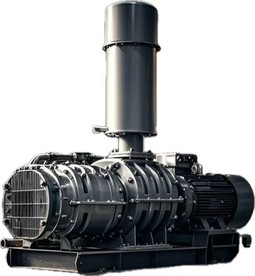
To address these issues, the plant decided to upgrade the aeration system of the biological reaction tanks by selecting three new high-efficiency three-lobe Roots blowers (two in operation, one on standby) as the core aeration equipment.
Implementation:
Equipment Selection: Roots blowers featuring advanced impeller profiles and integrated gearbox design were selected to ensure high efficiency and stability under high-pressure operating conditions.
System Integration: The blower outlets were connected to the main air header. Air was uniformly and efficiently converted into fine bubbles through precision microporous diffusers laid at the bottom of the biological tanks, significantly increasing oxygen transfer efficiency.
Intelligent Control: Integrated with a variable frequency drive (VFD) system, the blower speed and air output can be automatically adjusted based on real-time data from online monitors measuring inflow volume, water quality, and dissolved oxygen (DO), achieving on-demand oxygen supply.
Results:
Significantly Improved Effluent Quality: Stable air output ensured precise control of the dissolved oxygen concentration within the biological tanks, enhancing the activity of the activated sludge microbial community. The removal rates of key indicators (COD, ammonia nitrogen, total nitrogen) increased substantially, and the effluent consistently met the Grade 1A discharge standard.
Substantial Reduction in Energy Consumption: Compared to the old equipment, the new Roots blowers feature higher inherent efficiency. Combined with VFD regulation, the comprehensive energy saving rate exceeded 30%, resulting in annual electricity cost savings of over one million yuan.
Stable and Reliable Operation: The robust construction and simple maintenance of the Roots blowers ensured long periods of continuous, trouble-free operation, guaranteeing stable production at the wastewater treatment plant and reducing maintenance costs.
Environmentally Friendly: The significant reduction in equipment noise improved the working environment within the plant.
Conclusion:
In this case, the SSR Roots blowers, with their stable air output, strong resistance to load fluctuations, and high oxygen transfer efficiency, proved to be an ideal power source for the aeration process in municipal wastewater treatment. Their successful application not only guaranteed effluent quality but also achieved remarkable energy savings and consumption reduction. This provides a solid foundation for the stable, efficient, and low-cost operation of the wastewater treatment plant, demonstrating their critical value in environmental infrastructure.

Biochemical System Upgrade Project at a Large-Scale Food Processing Plant Wastewater Treatment Station

Project Background:
The wastewater generated by this food processing plant is characterized by high concentrations of organic pollutants (COD) and significant fluctuations in both water quality and volume. The original aeration system suffered from insufficient oxygen transfer capacity, failing to meet the demands of treating high-load wastewater. This resulted in poor microbial activity in the biological tanks, low treatment efficiency, and effluent COD levels severely exceeding standards, posing a risk of environmental penalties.
Solution:
To handle high-load shocks and ensure stable compliance with discharge standards, the plant installed two high-flow-rate Roots blowers (one operational, one standby) as the core aeration equipment for the biological tanks, complemented by an intelligent variable frequency control system.
Implementation
Load-Resistant Design
To address the high COD wastewater, Roots blowers with greater air volume and pressure margins were selected, ensuring sufficient oxygen supply even during peak loading conditions.
Corrosion Resistance Measures
In response to potentially corrosive gases from the production areas, the blowers received special anti-corrosion surface treatments, enhancing equipment durability in harsh environments.
Precise Aeration Control
The system automatically adjusts blower speed via Variable Frequency Drives (VFDs) based on the production line's drainage cycles and real-time dissolved oxygen (DO) data in the tanks. Air output is increased during peak production periods and reduced for energy-saving low-speed operation during night shifts or maintenance windows.
Results
Fundamental Improvement in Treatment Efficiency
The powerful aeration capability quickly enhanced the activity and concentration of the activated sludge. The system's resistance to load shocks significantly improved, and the effluent COD was consistently reduced to below 500 mg/L, successfully meeting the discharge standard.
Effective Operational Cost Control
The introduction of VFD control enabled "on-demand oxygen supply," reducing energy consumption by approximately 25% compared to the old throttle-valve method and significantly lowering operating costs.
Enhanced Stability and Adaptability
The simple, robust, and durable nature of the Roots blowers proved perfectly suited to the plant's complex, 24/7 continuous production environment, ensuring the stable and uninterrupted operation of the wastewater treatment line.
Conclusion:
In this industrial wastewater treatment case, the Roots blowers successfully resolved the challenges of treating high-concentration, variable industrial wastewater, leveraging their robust output characteristics, adaptability to complex conditions, and ease of maintenance. They served not only as a reliable power source for organic degradation but also, through energy-saving control, became key equipment for the plant to reduce environmental operating costs and achieve sustainable development, highlighting their indispensable value in the field of industrial environmental protection.

Products we can offer for this industry application: