

Hey there! As a Drive Belt Pulley supplier, I've seen firsthand how these little components can have a big impact on a motor's starting torque. In this blog, I'm gonna break down what starting torque is, how a drive belt pulley affects it, and why it matters for your machinery.
Let's start with the basics. Starting torque is the amount of torque a motor needs to get its load moving from a standstill. It's like the initial push you need to get a heavy object rolling. If the starting torque isn't high enough, the motor might struggle to start, or it could even fail to start at all. This can lead to all sorts of problems, from decreased productivity to costly repairs.
So, how does a Drive Belt Pulley fit into the picture? Well, a drive belt pulley is a wheel with a grooved rim that's used to transmit power from a motor to another part of a machine. It works by using a belt that wraps around the pulley and transfers the rotational force from the motor to the driven component.
One of the key ways a drive belt pulley affects starting torque is through its size. The diameter of the pulley plays a crucial role in determining the amount of torque that's transmitted to the driven component. A larger pulley will have a greater circumference, which means it can transmit more torque with each rotation. This is because the belt has to travel a longer distance around the pulley, which requires more force.
On the other hand, a smaller pulley will have a smaller circumference, which means it can transmit less torque. However, a smaller pulley also has a higher rotational speed, which can be beneficial in some applications. For example, if you need to drive a component at a high speed, a smaller pulley might be the way to go.
Another factor that affects starting torque is the type of belt that's used with the pulley. Different types of belts have different levels of friction and flexibility, which can impact the amount of torque that's transmitted. For example, a V-belt is a popular choice for many applications because it has a high level of friction, which helps to prevent slippage and ensures efficient power transmission. A timing belt, on the other hand, is designed to provide precise timing and synchronization between the motor and the driven component, which can be important in applications where accuracy is critical.
In addition to size and belt type, the material of the pulley can also have an impact on starting torque. Pulleys can be made from a variety of materials, including steel, aluminum, and plastic. Each material has its own unique properties, such as strength, weight, and durability, which can affect the performance of the pulley. For example, a steel pulley is typically stronger and more durable than an aluminum or plastic pulley, but it's also heavier. This can be a disadvantage in applications where weight is a concern.
So, why does all of this matter? Well, understanding how a drive belt pulley affects starting torque is important because it can help you choose the right pulley for your application. By selecting a pulley that's the right size, made from the right material, and used with the right type of belt, you can ensure that your motor has the starting torque it needs to get the job done.
In addition to improving starting torque, choosing the right drive belt pulley can also have other benefits. For example, it can help to reduce wear and tear on the motor and other components, which can extend their lifespan and reduce maintenance costs. It can also improve the efficiency of the machine, which can lead to lower energy consumption and cost savings.
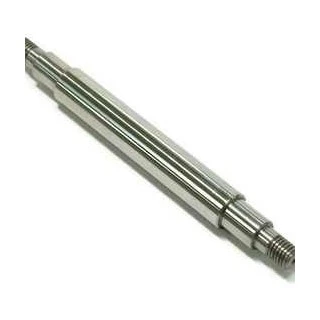

If you're in the market for a drive belt pulley, there are a few things to keep in mind. First, make sure you choose a pulley that's compatible with your motor and the driven component. This means considering factors such as the size, shape, and material of the pulley, as well as the type of belt that's used.
Second, look for a pulley that's made from high-quality materials and is designed to meet your specific application requirements. This might mean choosing a pulley that's strong, durable, and resistant to wear and tear, or one that's lightweight and designed for high-speed applications.
Finally, don't be afraid to ask for help. As a Drive Belt Pulley supplier, I'm always happy to answer any questions you might have and help you choose the right pulley for your needs. Whether you're a small business owner or a large industrial manufacturer, I can provide you with the information and support you need to make an informed decision.
In conclusion, a drive belt pulley can have a significant impact on the starting torque of a motor. By understanding how size, belt type, and material affect starting torque, you can choose the right pulley for your application and ensure that your motor has the power it needs to get the job done. If you're interested in learning more about drive belt pulleys or need help choosing the right one for your needs, please don't hesitate to reach out. I'd be happy to assist you.
References
- "Mechanical Engineering Design" by Joseph E. Shigley and Charles R. Mischke
- "Power Transmission Design Handbook" by John F. Doughtie and David G. Townsend
- "Machine Design: An Integrated Approach" by Robert L. Norton