

As a seasoned supplier of vacuum pumps, I've witnessed firsthand the diverse needs of industries relying on these essential pieces of equipment. One question that frequently arises is the difference between a vacuum pump with and without a check valve. In this blog post, I'll delve into the technical aspects, applications, and benefits of each type, helping you make an informed decision for your specific requirements.
Understanding the Basics: What is a Check Valve?
Before we explore the differences, let's clarify what a check valve is. A check valve, also known as a non - return valve, is a mechanical device that allows fluid (in this case, gas) to flow in one direction only. It automatically prevents backflow, ensuring that once the gas is pumped out, it doesn't return to the system.
Vacuum Pumps Without Check Valves
How They Work
Vacuum pumps without check valves operate based on the principle of creating a pressure differential to draw gas out of a chamber. These pumps typically rely on continuous pumping action to maintain the vacuum. For example, in a simple rotary vane pump without a check valve, the vanes rotate inside the pump chamber, creating expanding and contracting volumes. As the volume expands, gas is drawn into the chamber, and as it contracts, the gas is expelled.
Applications
- Low - Precision Applications: These pumps are suitable for applications where a high - level of vacuum stability is not critical. For instance, in some basic laboratory setups where quick evacuation of a small chamber is needed, a vacuum pump without a check valve can be sufficient. The simplicity of the design also makes it cost - effective for such applications.
- Continuous - Flow Systems: In systems where the gas flow is continuous and there is no risk of backflow due to the nature of the process, a check valve may not be necessary. For example, in some industrial drying processes where hot air is continuously drawn through a product to remove moisture, a vacuum pump without a check valve can be used.
Advantages
- Simplicity: Without the added complexity of a check valve, these pumps are generally easier to manufacture, maintain, and repair. This simplicity often translates into lower costs, both in terms of the initial purchase price and long - term maintenance.
- High - Flow Rates: Since there are no restrictions from a check valve, vacuum pumps without check valves can often achieve higher flow rates. This makes them suitable for applications where large volumes of gas need to be moved quickly.
Disadvantages
- Lack of Vacuum Hold: One of the major drawbacks is the inability to hold a vacuum once the pump is turned off. Without a check valve to prevent backflow, the vacuum in the system will gradually be lost as gas seeps back into the chamber.
- Susceptibility to Contamination: In some cases, the lack of a check valve can make the pump more susceptible to contamination. If there is a sudden pressure change in the system, contaminants can be drawn back into the pump, potentially damaging its components.
Vacuum Pumps With Check Valves
How They Work
Vacuum pumps with check valves incorporate the check valve into the pump's design. When the pump is operating, the check valve allows gas to flow out of the system as normal. However, when the pump stops, the check valve closes, preventing backflow and maintaining the vacuum in the system.
Applications
- High - Precision Applications: These pumps are ideal for applications where a stable vacuum is crucial. For example, in semiconductor manufacturing, where even a small fluctuation in vacuum pressure can lead to defects in the chips, a vacuum pump with a check valve is essential.
- Vacuum Packaging: In the food and pharmaceutical industries, vacuum packaging is used to extend the shelf life of products. A vacuum pump with a check valve ensures that the vacuum inside the packaging is maintained, preventing the entry of oxygen and other contaminants.
Advantages
- Vacuum Maintenance: The primary advantage is the ability to hold a vacuum once the pump is turned off. This is particularly important in applications where a continuous vacuum is required, but the pump may need to be stopped periodically for maintenance or other reasons.
- Contamination Prevention: The check valve acts as a barrier against backflow, reducing the risk of contaminants entering the pump. This helps to extend the lifespan of the pump and improve the overall reliability of the system.
Disadvantages
- Complexity and Cost: The addition of a check valve increases the complexity of the pump's design, which can lead to higher manufacturing costs. Additionally, the check valve itself may require regular maintenance and replacement, adding to the long - term operating costs.
- Reduced Flow Rates: The presence of a check valve can create some resistance to the gas flow, resulting in slightly reduced flow rates compared to pumps without check valves.
Comparing the Two: A Practical Example
Let's consider a pharmaceutical manufacturing process. In this scenario, a high - level of vacuum stability is required to ensure the quality of the drugs being produced.

- Without a Check Valve: A vacuum pump without a check valve may be able to quickly evacuate the reaction chamber at the start of the process. However, once the pump is turned off for any reason, such as for a quick maintenance check, the vacuum in the chamber will be lost. This can lead to contamination of the product and may require the entire process to be restarted, resulting in significant time and cost losses.
- With a Check Valve: On the other hand, a vacuum pump with a check valve will maintain the vacuum in the chamber even when the pump is turned off. This ensures that the manufacturing process can resume smoothly after the maintenance, reducing downtime and improving product quality.
Our Product Offerings
At our company, we offer a wide range of vacuum pumps to meet the diverse needs of our customers. Whether you need a simple and cost - effective pump without a check valve for low - precision applications or a high - performance pump with a check valve for critical processes, we have the solution for you.
- Pharmaceutical - Grade Vacuum Pump: Our pharmaceutical - grade vacuum pumps with check valves are designed to meet the strictest quality and safety standards in the industry. They provide a stable vacuum, ensuring the integrity of your pharmaceutical products.
- Oil - Free Vacuum Pump: These pumps are available with or without check valves, depending on your specific requirements. They are ideal for applications where oil contamination is a concern, such as in the food and electronics industries.
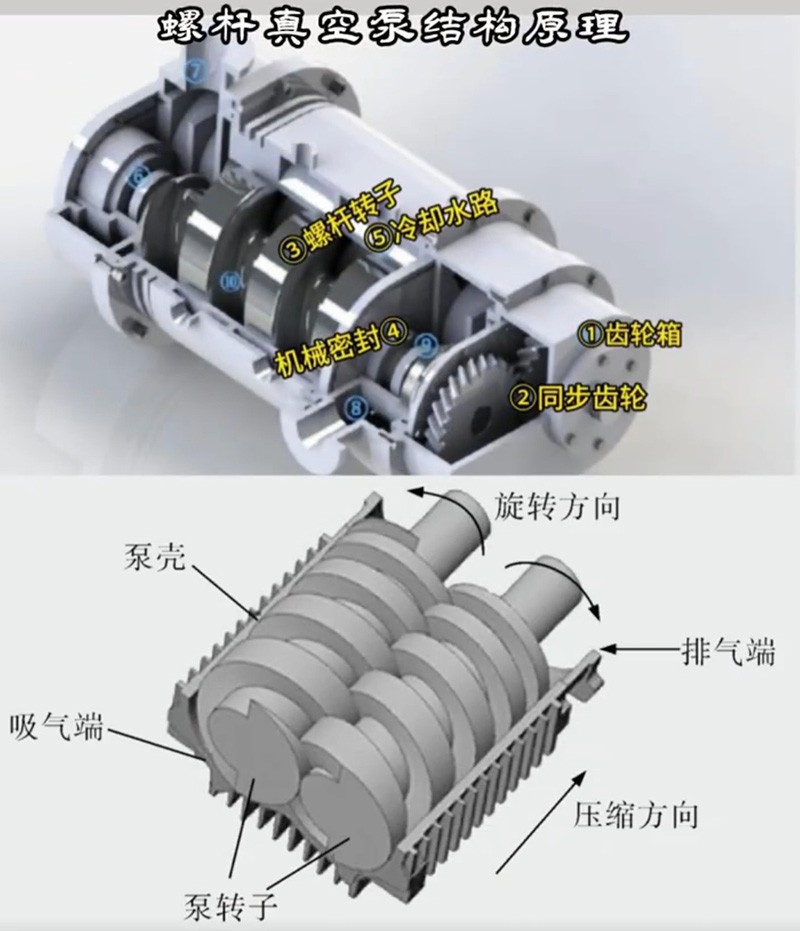
- Screw Dry Vacuum Pump: Our screw dry vacuum pumps offer high - performance and reliability. With the option of a check valve, they can be used in a variety of applications, from chemical processing to vacuum distillation.
Conclusion
The choice between a vacuum pump with and without a check valve depends on your specific application requirements. If you need a simple, cost - effective solution for low - precision applications or continuous - flow systems, a vacuum pump without a check valve may be the right choice. However, if you require a stable vacuum, protection against backflow, and high - precision performance, a vacuum pump with a check valve is recommended.
If you're still unsure which type of vacuum pump is best for your needs, our team of experts is here to help. We can provide you with detailed technical advice and product recommendations based on your specific application. Contact us today to start the procurement process and find the perfect vacuum pump for your business.
References
- "Vacuum Technology Handbook", edited by Peter L. Rice, provides in - depth information on the principles and applications of vacuum pumps.
- "Industrial Vacuum Pumps: Selection, Operation, and Maintenance" by John F. Doughty, offers practical insights into the selection and use of different types of vacuum pumps in industrial settings.