

Hey there! As a supplier of centrifugal pumps, I often get asked about the concept of the "head" of a centrifugal pump. So, let's dive right into it and break down what this term really means.
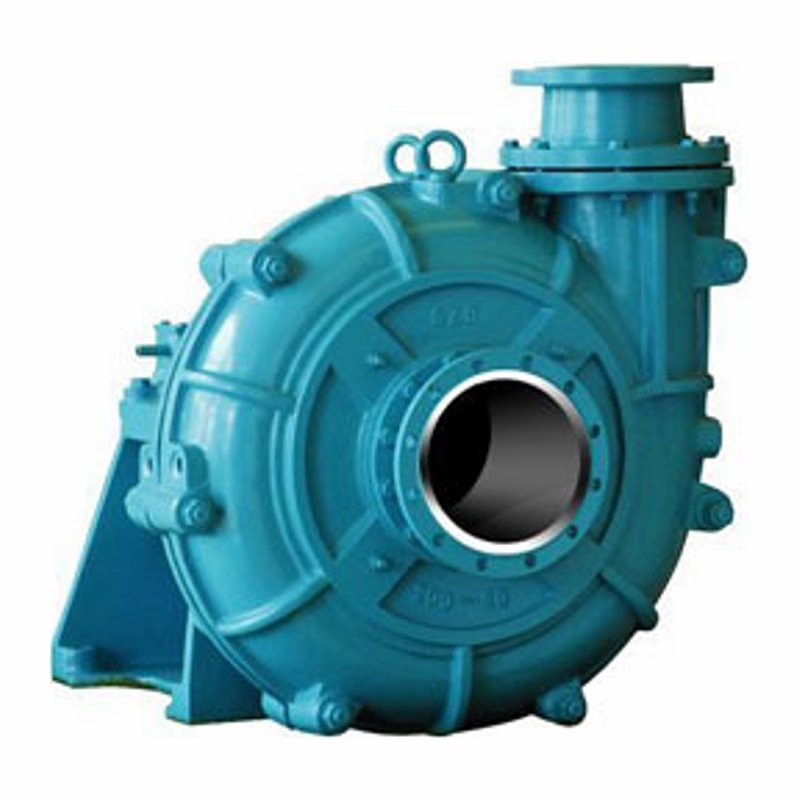
First off, what's a centrifugal pump? Well, it's a type of pump that uses an impeller to increase the pressure and flow rate of a fluid. You can find these pumps in all sorts of applications, from industrial settings to water treatment plants. We offer a wide range of centrifugal pumps, like the Slurry Pump, Clean Water Pump, and Stainless Steel Mag Drive Pump.
Now, back to the head of a centrifugal pump. In simple terms, the head is a measure of the energy that the pump imparts to the fluid. It's not the same as pressure, although they're related. The head is usually expressed in units of length, like meters or feet. You can think of it as the height to which the pump can lift a column of fluid against gravity.
There are different types of head when it comes to centrifugal pumps. The first one is the total dynamic head (TDH). This is the sum of the static head and the friction head. The static head is the vertical distance between the suction and the discharge points. For example, if you're pumping water from a well to a tank on a rooftop, the vertical distance between the water level in the well and the water level in the tank is the static head.
The friction head, on the other hand, accounts for the energy losses due to friction as the fluid flows through the pipes, valves, and fittings. These losses depend on factors like the pipe diameter, the length of the pipe, the roughness of the pipe walls, and the flow rate of the fluid. The higher the flow rate, the greater the friction losses.
Let's take a look at an example to make this clearer. Suppose you have a centrifugal pump that's used to pump water from a lake to a storage tank. The water level in the lake is 5 meters below the pump, and the water level in the tank is 20 meters above the pump. So, the static head is 20 + 5 = 25 meters. Now, let's say that due to friction in the pipes and fittings, there's an additional head loss of 5 meters. The total dynamic head in this case would be 25 + 5 = 30 meters.
Another important concept related to the head is the net positive suction head (NPSH). This is crucial for preventing a phenomenon called cavitation. Cavitation occurs when the pressure at the suction side of the pump drops below the vapor pressure of the fluid. When this happens, vapor bubbles form in the fluid, and when these bubbles collapse, they can cause damage to the pump impeller and other components.
The NPSH available (NPSHa) is the actual head available at the suction side of the pump, taking into account the static head, the friction head, and the vapor pressure of the fluid. The NPSH required (NPSHr) is the minimum head that the pump needs at the suction side to operate without cavitation. The pump manufacturer usually provides the NPSHr data for each pump model. To ensure proper operation, the NPSHa must be greater than the NPSHr.
The head of a centrifugal pump is also related to its performance curve. A performance curve shows the relationship between the flow rate and the head of the pump. As the flow rate increases, the head usually decreases. This is because as more fluid is flowing through the pump, there are more friction losses and the pump has to work harder to maintain the flow.
When selecting a centrifugal pump for a specific application, it's important to consider the required head and flow rate. You need to make sure that the pump can provide the necessary head at the desired flow rate. If the head is too low, the pump won't be able to lift the fluid to the required height or overcome the friction losses. On the other hand, if the head is too high, the pump may operate inefficiently and consume more energy than necessary.
As a centrifugal pump supplier, we understand the importance of getting the head right. That's why we offer a variety of pumps with different head and flow rate capabilities to meet the diverse needs of our customers. Whether you're looking for a Slurry Pump for handling abrasive slurries or a Clean Water Pump for domestic or industrial water supply, we've got you covered.
If you're in the market for a centrifugal pump and need help in selecting the right one based on the head requirements of your application, don't hesitate to reach out. Our team of experts is here to assist you in making the best choice. We can provide you with detailed information about the pump performance curves, the NPSH requirements, and other technical specifications.
In conclusion, understanding the head of a centrifugal pump is essential for proper pump selection and operation. It helps you ensure that the pump can deliver the required flow rate at the desired height and that it operates efficiently without issues like cavitation. So, if you have any questions or need further clarification on this topic, feel free to contact us. We're always happy to help you find the perfect centrifugal pump for your needs.

References
- "Pump Handbook" by Igor J. Karassik et al.
- "Centrifugal Pumps: Design and Application" by Heinz P. Bloch and Allan R. Budris.