

As a centrifugal pump supplier, I understand the critical role that corrosion resistance plays in the performance and longevity of these essential pieces of equipment. Corrosion can lead to significant issues such as reduced efficiency, increased maintenance costs, and even premature failure of the pump. Therefore, selecting the right materials is crucial to ensure that the centrifugal pump can withstand the corrosive environments it may encounter. In this blog post, I will explore various materials that can improve the corrosion resistance of a centrifugal pump.
Stainless Steel
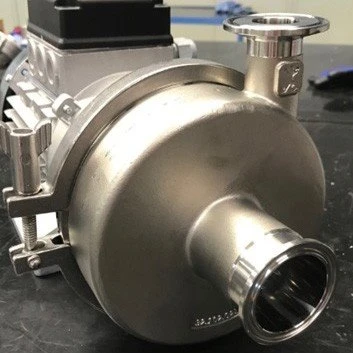
Stainless steel is one of the most commonly used materials for improving the corrosion resistance of centrifugal pumps. It is an alloy of iron, chromium, and other elements, with chromium being the key component that provides corrosion resistance. When chromium reacts with oxygen in the air, it forms a thin, passive oxide layer on the surface of the steel. This layer acts as a barrier, preventing further oxidation and corrosion.
There are different grades of stainless steel, each with its own unique properties and levels of corrosion resistance. For example, 304 stainless steel is a popular choice for general-purpose applications due to its good corrosion resistance in a wide range of environments. It contains approximately 18% chromium and 8% nickel, which helps to enhance its resistance to rust and staining.
On the other hand, 316 stainless steel is more suitable for applications where the pump will be exposed to more aggressive corrosive agents, such as saltwater or chemicals. It contains an additional 2-3% molybdenum, which further improves its resistance to pitting and crevice corrosion.
Our Stainless Steel Mag Drive Pump is constructed using high-quality stainless steel materials, providing excellent corrosion resistance and reliable performance in various industrial applications.
Cast Iron with Protective Coatings
Cast iron is a strong and durable material that is often used in the construction of centrifugal pumps. However, it is prone to corrosion, especially in the presence of moisture and certain chemicals. To improve its corrosion resistance, cast iron pumps can be coated with protective materials.
One common type of coating is epoxy coating. Epoxy coatings form a hard, protective layer on the surface of the cast iron, preventing direct contact between the metal and the corrosive environment. They are resistant to a wide range of chemicals and can provide long-term protection against rust and corrosion.
Another option is a rubber lining. Rubber linings are often used in pumps that handle abrasive or corrosive slurries. The rubber acts as a barrier, protecting the cast iron from wear and corrosion. It also provides a smooth surface, which helps to reduce friction and improve the efficiency of the pump.
Our Slurry Pump features a cast iron body with a high-quality rubber lining, ensuring excellent corrosion and abrasion resistance in demanding slurry handling applications.
Titanium
Titanium is a highly corrosion-resistant metal that is often used in applications where extreme corrosion resistance is required. It forms a very stable oxide layer on its surface, which provides excellent protection against a wide range of corrosive agents, including acids, alkalis, and seawater.
Titanium is also lightweight and has high strength, making it an ideal material for centrifugal pumps. However, it is more expensive than other materials, so it is typically used in specialized applications where the benefits of its corrosion resistance outweigh the cost.
Ceramics
Ceramics are another material that can be used to improve the corrosion resistance of centrifugal pumps. They are highly resistant to chemical attack and can withstand high temperatures and abrasive wear.
One type of ceramic commonly used in pump applications is silicon carbide. Silicon carbide ceramics have excellent hardness and wear resistance, making them suitable for pumps that handle abrasive slurries. They also have good chemical resistance, especially in acidic and alkaline environments.
Another option is alumina ceramics. Alumina ceramics are known for their high strength and excellent corrosion resistance. They are often used in pumps that handle corrosive chemicals or high-temperature fluids.
Fiberglass Reinforced Plastic (FRP)
Fiberglass reinforced plastic, or FRP, is a composite material made of a polymer matrix reinforced with fiberglass. It is lightweight, strong, and highly resistant to corrosion.
FRP pumps are commonly used in applications where the pump will be exposed to corrosive chemicals or environments. They are resistant to a wide range of acids, alkalis, and solvents, and can provide long-term performance in harsh conditions.
Our Clean Water Pump is available in FRP construction, offering excellent corrosion resistance and reliable performance for clean water applications.
Conclusion
In conclusion, there are several materials that can be used to improve the corrosion resistance of a centrifugal pump. The choice of material depends on various factors, such as the type of corrosive environment, the operating conditions, and the budget. Stainless steel, cast iron with protective coatings, titanium, ceramics, and FRP are all viable options, each with its own advantages and disadvantages.
As a centrifugal pump supplier, we offer a wide range of pumps constructed from different materials to meet the diverse needs of our customers. Whether you need a pump for clean water applications, chemical processing, or slurry handling, we have the right solution for you.
If you are interested in learning more about our centrifugal pumps or would like to discuss your specific requirements, please feel free to contact us. Our team of experts is ready to assist you in selecting the most suitable pump and material for your application.

References
- ASM Handbook Volume 13A: Corrosion: Fundamentals, Testing, and Protection. ASM International.
- Perry's Chemical Engineers' Handbook. McGraw-Hill Education.
- Pump Handbook. Karassik, I. J., Messina, J. P., Cooper, P. T., & Heald, C. C. (Eds.). McGraw-Hill Education.