

Viscosity is a fundamental property of fluids that significantly influences the performance of various pumping systems. Among these, the rotor screw pump stands out as a versatile and efficient solution for handling a wide range of viscous fluids. As a leading rotor screw pump supplier, we understand the intricate relationship between viscosity and pump performance, and in this blog, we will delve into how viscosity affects the operation of rotor screw pumps.
Understanding Viscosity
Before we explore its impact on rotor screw pumps, let's first define viscosity. Viscosity is a measure of a fluid's resistance to flow. It describes the internal friction within a fluid as its molecules move relative to one another. Fluids with high viscosity, such as honey or motor oil, flow slowly and have a thick consistency, while low - viscosity fluids like water flow easily.
Viscosity can be further classified into dynamic viscosity (measured in pascal - seconds, Pa·s) and kinematic viscosity (measured in square meters per second, m²/s). Dynamic viscosity takes into account the fluid's internal resistance to flow, while kinematic viscosity is the ratio of dynamic viscosity to the fluid's density.
How Viscosity Affects Rotor Screw Pump Performance
Flow Rate
One of the most significant ways viscosity affects a rotor screw pump is through its impact on the flow rate. In general, as the viscosity of the fluid increases, the flow rate of the pump decreases. This is because higher - viscosity fluids offer more resistance to the movement of the pump's rotors. The rotors have to work harder to push the thick fluid through the pump and into the discharge line.
For a rotor screw pump operating at a constant speed, the volumetric efficiency, which is the ratio of the actual flow rate to the theoretical flow rate, decreases with increasing viscosity. At low viscosities, the fluid can easily fill the spaces between the rotors and be transported efficiently. However, as the viscosity rises, the fluid may not completely fill these spaces, leading to internal leakage and a reduction in the overall flow rate.
For example, when pumping water (a low - viscosity fluid), a rotor screw pump can achieve a relatively high flow rate. But if the same pump is used to handle a highly viscous polymer solution, the flow rate will be significantly lower, even if the pump speed remains the same.

Pressure
Viscosity also has a direct impact on the pressure generated by the rotor screw pump. Higher - viscosity fluids require more energy to be pumped, which in turn leads to an increase in the pressure developed by the pump. The pump's rotors need to overcome the greater internal resistance of the thick fluid to move it through the system.
As the viscosity increases, the pump has to generate a higher pressure to maintain the desired flow rate. This means that the pump motor has to work harder, consuming more power. If the pump is not properly sized or designed for high - viscosity applications, it may not be able to generate enough pressure to pump the fluid effectively, resulting in inadequate performance.
Power Consumption
Power consumption is closely related to the pressure and flow rate requirements of the pump. Since higher - viscosity fluids increase both the pressure and reduce the flow rate, the power consumption of the rotor screw pump also increases. The pump motor has to provide more energy to overcome the increased resistance of the viscous fluid.
The power required to operate a rotor screw pump can be calculated using the following formula:
[P=\frac{\Delta p\times Q}{\eta}]
where (P) is the power, (\Delta p) is the pressure difference across the pump, (Q) is the flow rate, and (\eta) is the pump efficiency. As the viscosity increases, (\Delta p) increases, (Q) decreases, and (\eta) decreases, all of which contribute to an increase in the power consumption.
Pump Efficiency
Pump efficiency is a measure of how effectively the pump converts the input power into useful work (i.e., pumping the fluid). Viscosity has a complex relationship with pump efficiency. At very low viscosities, the pump may experience some inefficiencies due to internal leakage and fluid slippage. As the viscosity increases, the internal leakage is reduced, which can initially improve the pump's efficiency.
However, as the viscosity continues to rise, the increased power consumption and reduced flow rate start to have a negative impact on the efficiency. There is an optimal viscosity range for a rotor screw pump where the efficiency is maximized. Outside of this range, either at very low or very high viscosities, the pump efficiency will decrease.
Types of Rotor Screw Pumps and Viscosity
There are different types of rotor screw pumps, including One Rotor Screw Pump, Two Rotor Screw Pump, and Three Rotor Screw Pump, each with its own characteristics and suitability for different viscosity ranges.
One Rotor Screw Pump
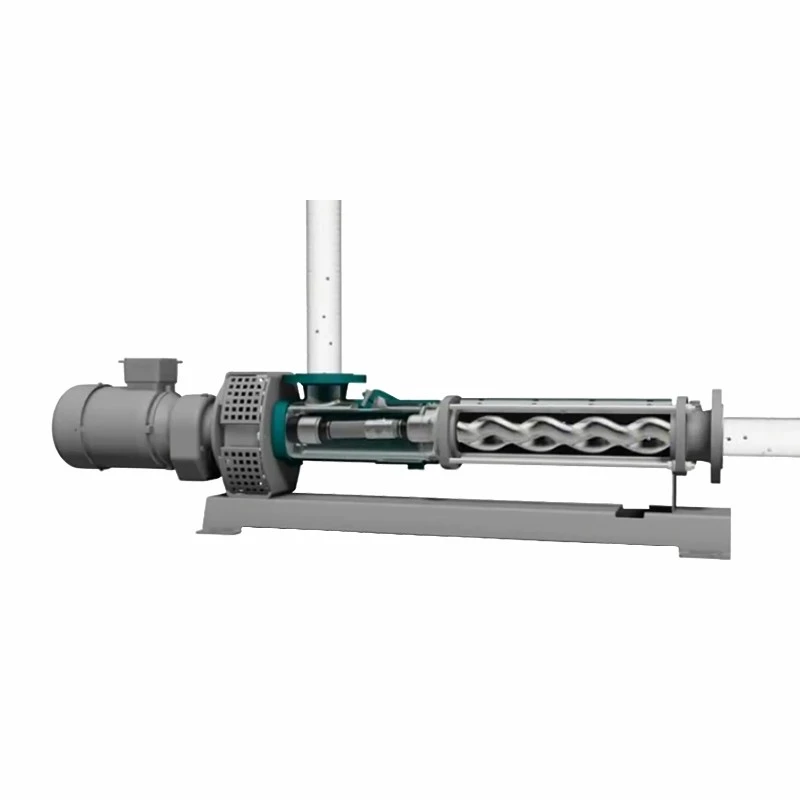
One - rotor screw pumps, also known as progressive cavity pumps, are well - suited for handling highly viscous fluids. They can handle viscosities ranging from a few centipoise to several million centipoise. The single - screw design allows the pump to create a series of sealed cavities that move the fluid axially through the pump. This design is effective in handling fluids with high viscosities because it can generate high pressures and maintain a relatively stable flow rate.
Two Rotor Screw Pump
Two - rotor screw pumps are commonly used for medium - viscosity fluids. They offer a good balance between flow rate and pressure capabilities. These pumps can handle viscosities in the range of 10 to 10,000 centipoise. The two - rotor design provides a more consistent flow compared to some other pump types and can handle a variety of fluids, including lubricating oils and light slurries.
Three Rotor Screw Pump
Three - rotor screw pumps are often used for low - to medium - viscosity fluids. They are known for their smooth and pulsation - free operation. These pumps can handle viscosities typically in the range of 1 to 1,000 centipoise. The three - rotor configuration allows for efficient fluid transfer and is suitable for applications where a precise flow rate and low noise are required, such as in hydraulic systems.
Considerations for Pumping High - Viscosity Fluids
When using a rotor screw pump to handle high - viscosity fluids, several considerations should be taken into account:
Pump Design
The pump should be specifically designed for high - viscosity applications. This may include larger clearances between the rotors to accommodate the thick fluid, stronger rotors to withstand the increased torque, and a more powerful motor to provide the necessary energy.
Pre - heating
In some cases, pre - heating the fluid can reduce its viscosity and improve the pump's performance. By lowering the viscosity, the pump can achieve a higher flow rate and lower power consumption. However, pre - heating should be done carefully to avoid any chemical or physical changes in the fluid.
System Design
The entire pumping system, including the piping and valves, should be designed to handle high - viscosity fluids. Larger - diameter pipes can reduce the pressure drop and make it easier for the thick fluid to flow. Valves should also be selected to ensure smooth flow and minimize any restrictions.
Conclusion
Viscosity plays a crucial role in the performance of a rotor screw pump. It affects the flow rate, pressure, power consumption, and efficiency of the pump. As a rotor screw pump supplier, we understand the importance of selecting the right pump for the specific viscosity of the fluid being pumped. Whether you need a One Rotor Screw Pump for highly viscous fluids, a Two Rotor Screw Pump for medium - viscosity applications, or a Three Rotor Screw Pump for low - to medium - viscosity fluids, we can provide you with the best solution.
If you are looking for a reliable rotor screw pump for your application, we invite you to contact us for a detailed consultation. Our team of experts can help you select the right pump based on the viscosity of your fluid, the required flow rate, and the pressure specifications. We are committed to providing high - quality pumps and excellent customer service to ensure your pumping needs are met efficiently and effectively.
References
- Karassik, I. J., Messina, R. W., Cooper, P., & Heald, C. C. (2008). Pump Handbook (4th ed.). McGraw - Hill.
- Stepanoff, A. J. (1957). Centrifugal and Axial Flow Pumps: Theory, Design, and Application. John Wiley & Sons.