

What is the flow rate range of a One Rotor Screw Pump?
As a supplier of One Rotor Screw Pumps, understanding the flow rate range of these pumps is crucial. It not only helps in accurately matching the pump to the specific requirements of different applications but also allows customers to make informed decisions when it comes to their fluid - handling needs.
One Rotor Screw Pumps, also known as single - screw pumps, are positive displacement pumps. They operate on the principle of a single helix rotor turning inside a double - helix stator. This unique design enables them to handle a wide variety of fluids, including viscous, abrasive, and shear - sensitive substances.
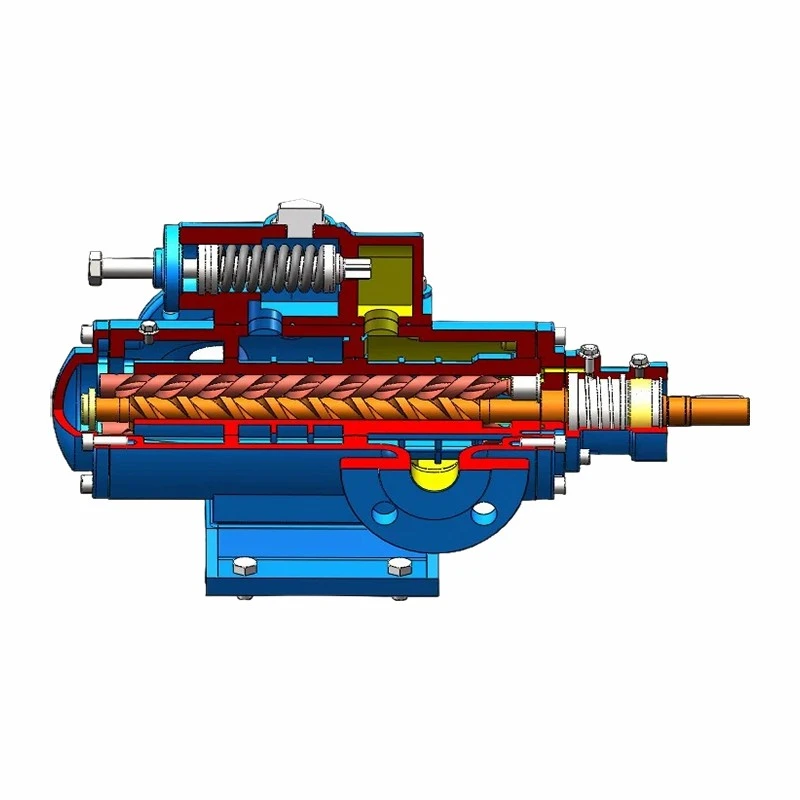

The flow rate of a One Rotor Screw Pump can vary significantly depending on several factors. One of the primary factors is the pump's size. Generally, larger pumps with bigger rotors and stators can handle higher flow rates. For small - sized One Rotor Screw Pumps, the flow rate can start as low as 0.1 cubic meters per hour (m³/h). These small pumps are often used in applications where a precise and low - volume transfer of fluids is required, such as in laboratory settings, small - scale chemical dosing, or in some food processing operations where small amounts of additives need to be introduced.
On the other end of the spectrum, large - scale One Rotor Screw Pumps can achieve flow rates of up to 150 m³/h or even higher in some specialized industrial applications. These high - flow pumps are commonly found in industries like mining, where they are used to transfer slurries, or in the oil and gas industry for handling crude oil and other viscous hydrocarbons.
Another factor that affects the flow rate is the rotational speed of the pump. The flow rate of a One Rotor Screw Pump is directly proportional to its rotational speed, within the pump's designed operating range. By increasing the speed of the rotor, more fluid can be displaced in a given time, thus increasing the flow rate. However, it's important to note that there are limits to how much the speed can be increased. Excessive speed can lead to issues such as increased wear and tear on the pump components, cavitation, and reduced efficiency.
The viscosity of the fluid being pumped also plays a significant role in determining the flow rate. One Rotor Screw Pumps are well - known for their ability to handle highly viscous fluids. But as the viscosity increases, the flow rate may decrease for a given pump speed. This is because more energy is required to move the thick fluid through the pump. For example, when pumping a thin liquid like water, the pump can achieve a relatively high flow rate at a certain speed. But when switching to a highly viscous substance like molasses or heavy - duty grease, the flow rate will be lower, even if the pump speed remains the same.
In comparison to other types of screw pumps, such as the Three Rotor Screw Pump and the Two Rotor Screw Pump, One Rotor Screw Pumps offer a unique advantage in terms of flow rate flexibility. Three Rotor Screw Pumps are typically more suitable for high - pressure and relatively low - viscosity applications, and their flow rate characteristics are optimized for such conditions. Two Rotor Screw Pumps, on the other hand, are often used in applications where a moderate flow rate and pressure are required. One Rotor Screw Pumps, with their ability to handle a wide range of viscosities and flow rates, can be a more versatile choice for many different industries.
In industrial applications, the flow rate requirements are often very specific. For instance, in the pulp and paper industry, One Rotor Screw Pumps are used to transfer pulp, which is a highly viscous and fibrous fluid. The flow rate needs to be carefully controlled to ensure a smooth and continuous production process. A typical flow rate for pulp transfer in a medium - sized paper mill might range from 10 to 50 m³/h, depending on the production capacity of the mill.
In the pharmaceutical industry, where precision and hygiene are of utmost importance, One Rotor Screw Pumps are used to transfer various liquid medications and solutions. The flow rate in these applications can be relatively low, usually in the range of 0.5 to 10 m³/h, to ensure accurate dosing and prevent contamination.
When selecting a One Rotor Screw Pump for a particular application, it's essential to consider not only the required flow rate but also other factors such as the pressure requirements, the nature of the fluid (viscosity, abrasiveness, corrosiveness), and the operating environment. Our company, as a professional supplier of One Rotor Screw Pumps, has a team of experts who can assist you in making the right choice. We have a wide range of pump models with different flow rate capabilities to meet the diverse needs of our customers.
If you are in the process of evaluating a pump for your fluid - handling application, we encourage you to reach out to us. Our experienced sales team can provide you with detailed information about our One Rotor Screw Pumps, including their flow rate ranges, performance characteristics, and pricing. We can also offer on - site consultations and technical support to ensure that you get the most suitable pump for your specific requirements. Whether you need a pump for a small - scale laboratory project or a large - scale industrial operation, we are here to help you make the best decision.
In conclusion, the flow rate range of a One Rotor Screw Pump is quite broad, spanning from as low as 0.1 m³/h to over 150 m³/h. This wide range, combined with the pump's ability to handle different types of fluids, makes it a popular choice in many industries. If you have any questions or need further information about our One Rotor Screw Pumps, please don't hesitate to contact us for procurement discussions.
References
- "Positive Displacement Pumps: Selection and Sizing" by Karassik, I. J., et al.
- "Pump Handbook" by Stepanoff, A. J.