

In the realm of sewage treatment plants, the selection of appropriate pumping equipment is crucial for efficient and reliable operation. Among the various types of pumps available, screw pumps have gained significant popularity due to their ability to handle viscous and abrasive fluids. In this blog post, we will explore the feasibility of using a One Rotor Screw Pump in sewage treatment plants, considering its design, advantages, limitations, and applications. As a supplier of One Rotor Screw Pumps, I will also provide insights into how our products can meet the specific requirements of sewage treatment facilities.
Understanding Screw Pumps
Screw pumps are positive displacement pumps that use one or more screws to transfer fluid along the axis of the pump. The basic principle involves the rotation of the screw(s) within a stator, creating a series of sealed cavities that move the fluid from the suction side to the discharge side. Depending on the number of screws, screw pumps can be classified into three main types: One Rotor Screw Pump, Two Rotor Screw Pump, and Three Rotor Screw Pump.
- One Rotor Screw Pump: Also known as a progressive cavity pump, a One Rotor Screw Pump consists of a single helical rotor that rotates within a double-helix stator. The eccentric motion of the rotor creates a series of moving cavities that transport the fluid continuously. This type of pump is known for its ability to handle high-viscosity fluids, solids, and abrasive materials.
- Two Rotor Screw Pump: A Two Rotor Screw Pump features two intermeshing screws that rotate in opposite directions within a casing. The screws create a series of sealed chambers that move the fluid axially. This type of pump is suitable for handling clean, lubricating fluids and is often used in applications where a constant flow rate is required.
- Three Rotor Screw Pump: Similar to the Two Rotor Screw Pump, a Three Rotor Screw Pump uses three intermeshing screws to transfer fluid. The additional screw provides a more balanced and efficient pumping action, making it suitable for high-pressure applications and handling a wide range of fluids, including viscous and non-lubricating liquids.
Advantages of One Rotor Screw Pumps in Sewage Treatment
One Rotor Screw Pumps offer several advantages that make them well-suited for sewage treatment applications:
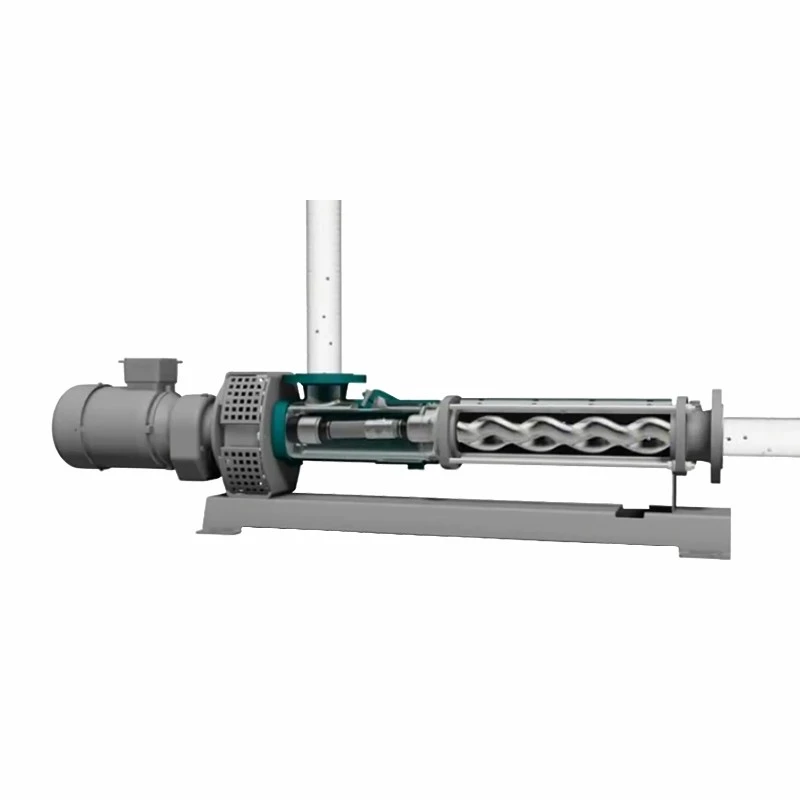

- Handling of Viscous and Abrasive Fluids: Sewage often contains high levels of solids, sludge, and other viscous materials. One Rotor Screw Pumps are designed to handle these challenging fluids without clogging or excessive wear. The progressive cavity design allows the pump to transport the fluid smoothly, even at low flow rates.
- Variable Flow and Pressure: One Rotor Screw Pumps can operate at a wide range of flow rates and pressures, making them suitable for different stages of the sewage treatment process. The flow rate can be easily adjusted by changing the speed of the pump, allowing for precise control of the treatment process.
- Self-Priming Capability: One Rotor Screw Pumps are self-priming, which means they can start pumping without the need for external priming. This feature is particularly useful in sewage treatment plants where the pump may be located above the liquid level or where the suction line may be filled with air.
- Low Shear Operation: The gentle pumping action of One Rotor Screw Pumps minimizes the shear forces on the fluid, which is important for preserving the integrity of the sewage and any biological organisms present in the treatment process. This helps to maintain the efficiency of the treatment system and reduce the risk of damage to the pump components.
- Easy Maintenance: One Rotor Screw Pumps are relatively easy to maintain compared to other types of pumps. The simple design and few moving parts make it easy to access and replace the wear components, such as the rotor and stator. This reduces downtime and maintenance costs, ensuring continuous operation of the sewage treatment plant.
Limitations of One Rotor Screw Pumps
While One Rotor Screw Pumps offer many advantages, they also have some limitations that need to be considered:
- Limited Pressure Capability: One Rotor Screw Pumps are generally not suitable for high-pressure applications. The maximum pressure that a One Rotor Screw Pump can generate is typically limited to a few hundred psi, depending on the design and size of the pump. In applications where higher pressures are required, other types of pumps, such as Three Rotor Screw Pump, may be more appropriate.
- Stator Wear: The stator of a One Rotor Screw Pump is subject to wear over time, especially when handling abrasive fluids. The wear rate depends on several factors, such as the type and concentration of the solids in the fluid, the operating conditions, and the quality of the stator material. Regular inspection and replacement of the stator are necessary to ensure the continued performance of the pump.
- Higher Initial Cost: One Rotor Screw Pumps tend to have a higher initial cost compared to other types of pumps. This is due to the complex design and the use of specialized materials for the rotor and stator. However, the long-term benefits of using a One Rotor Screw Pump, such as reduced maintenance costs and improved efficiency, often outweigh the higher initial investment.
Applications of One Rotor Screw Pumps in Sewage Treatment
One Rotor Screw Pumps are widely used in various stages of the sewage treatment process, including:
- Raw Sewage Transfer: One Rotor Screw Pumps are commonly used to transfer raw sewage from the collection system to the treatment plant. The ability to handle high-viscosity fluids and solids makes them suitable for this application, where the sewage may contain a variety of debris and contaminants.
- Sludge Handling: Sewage treatment plants generate large amounts of sludge, which needs to be pumped and treated. One Rotor Screw Pumps are ideal for handling sludge due to their ability to handle high solids content and variable flow rates. They can be used for sludge transfer, thickening, and dewatering processes.
- Chemical Dosing: In sewage treatment plants, various chemicals are added to the sewage to aid in the treatment process, such as coagulants, flocculants, and disinfectants. One Rotor Screw Pumps can be used to accurately dose these chemicals into the sewage stream, ensuring the proper treatment of the wastewater.
- Recirculation and Return Activated Sludge: One Rotor Screw Pumps are also used for recirculation and return activated sludge (RAS) applications in sewage treatment plants. The ability to handle low-flow rates and variable pressures makes them suitable for maintaining the proper flow of sludge within the treatment system.
Our One Rotor Screw Pump Solutions
As a leading supplier of One Rotor Screw Pump, we offer a wide range of products that are specifically designed for sewage treatment applications. Our pumps are built to withstand the harsh conditions of sewage treatment plants and provide reliable and efficient operation.
- High-Quality Materials: We use high-quality materials for the rotor and stator of our One Rotor Screw Pumps to ensure long-lasting performance and resistance to wear and corrosion. The stator is made from a specially formulated elastomer that provides excellent chemical resistance and abrasion resistance, while the rotor is made from a hardened steel or stainless steel material.
- Customized Design: We understand that every sewage treatment plant has unique requirements, and we offer customized design solutions to meet the specific needs of our customers. Our engineering team can work with you to select the appropriate pump size, configuration, and materials based on your application requirements, flow rate, pressure, and fluid characteristics.
- Advanced Technology: Our One Rotor Screw Pumps are equipped with advanced technology and features to improve their performance and reliability. For example, we use a precision-machined rotor and stator to ensure a tight fit and minimize leakage, and we offer optional features such as variable speed drives and monitoring systems to optimize the operation of the pump.
- Comprehensive Support: In addition to our high-quality products, we also provide comprehensive support services to our customers. Our technical support team is available to assist you with pump selection, installation, commissioning, and maintenance, ensuring that your One Rotor Screw Pump operates at its best.
Conclusion
In conclusion, One Rotor Screw Pumps can be effectively used in sewage treatment plants due to their ability to handle viscous and abrasive fluids, variable flow and pressure requirements, self-priming capability, low shear operation, and easy maintenance. While they have some limitations, such as limited pressure capability and stator wear, these can be managed through proper pump selection, design, and maintenance.
As a supplier of One Rotor Screw Pump, we are committed to providing high-quality products and comprehensive support to our customers in the sewage treatment industry. If you are considering using a One Rotor Screw Pump in your sewage treatment plant or have any questions about our products, please feel free to contact us. We would be happy to discuss your specific requirements and provide you with a customized solution that meets your needs.
References
- "Screw Pumps: Principles, Design, and Applications" by Peter J. Price
- "Sewage Treatment Plant Design and Operation" by Metcalf & Eddy
- "Pump Handbook" by Igor J. Karassik